

False alarm on UAE phones: Authorities explain technical issue behind emergency alerts
Authorities urge residents to rely only on verified official updates
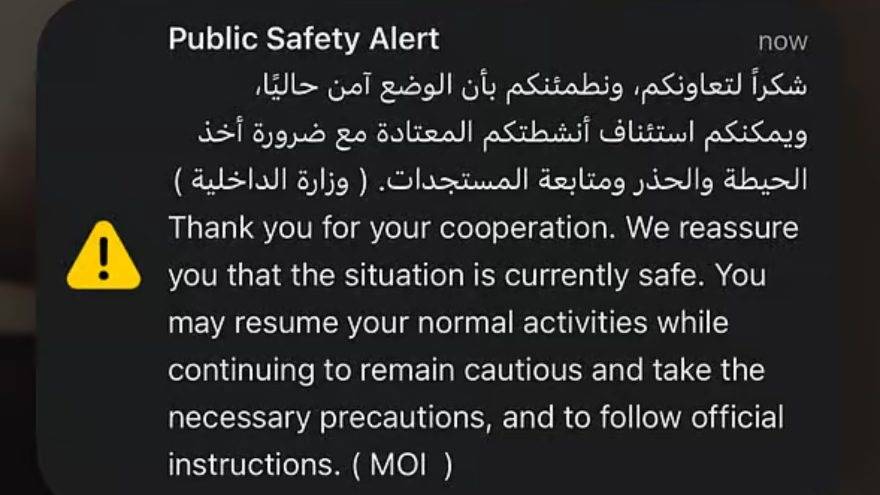
ABU DHABI – Residents across the United Arab Emirates (UAE) received emergency warning notifications on Friday evening after a technical malfunction affected the national early warning system, resulting in incorrect alert messages being issued.
The initial notification, received at around 5.17pm, advised residents to seek shelter due to a potential missile threat, before authorities later clarified that the message was sent due to a system-related issue. The National Emergency, Crisis and Disaster Management Authority (NCEMA) confirmed that the malfunction had been addressed, with specialised teams taking immediate corrective action to restore normal operations.
The incident marked the first time in 53 days that residents heard the country’s emergency alert system activate. Shortly after the initial warning, a follow-up message was sent advising the public to disregard the previous alert, while the Ministry of Interior clarified that there was no ongoing threat.
Technical Malfunction in the Early Warning System Handled, with Appreciation to Community Cooperation and Understanding. pic.twitter.com/79PWvG9DCU
— NCEMA UAE (@NCEMAUAE) June 26, 2026
The NCEMA and relevant authorities issued an apology for the unintentional technical malfunction and thanked members of the community for their understanding, cooperation and commitment to following official guidance. Authorities highlighted the importance of obtaining information only through approved channels and avoiding the spread of unverified updates, stressing that accurate information plays a key role in supporting preparedness and response efforts.
System response
According to NCEMA, the technical issue was detected and handled through established procedures designed to maintain service continuity and minimise any impact on users. The authority said specialised teams immediately began corrective measures in line with approved emergency response plans.
Officials also reiterated the need for residents to depend on official sources for updates and avoid circulating information that has not been issued by authorised entities.
The alert incident comes amid a period of reduced regional tensions following recent diplomatic developments. Hostilities in the region have remained at a lower level since June 17, after the United States and Iran signed a Memorandum of Understanding, widely referred to as a peace framework.
During previous tensions, the UAE had engaged multiple incoming threats, including 551 ballistic missiles, 29 cruise missiles and 2,263 unmanned aerial vehicles (UAVs), countering nearly 3,000 attempted attacks.
Regional updates
Diplomatic engagement has continued in recent weeks, with UAE Minister of Foreign Affairs Sheikh Abdullah bin Zayed Al Nahyan receiving a phone call from Iranian Foreign Minister Abbas Araghchi on Friday. The two officials discussed regional developments following a visit by US Vice President Marco Rubio to the UAE.
During Rubio’s three-day Gulf tour, the first high-level diplomatic mission since the US-Iran framework agreement aimed at ending the conflict that began on February 28 with US-Israeli strikes on Iran, discussions focused on regional stability, the memorandum of understanding with Iran and ensuring safe transit through the Strait of Hormuz.
Rubio’s spokesperson Tommy Pigott said the US official reaffirmed Washington’s commitment to the security of the UAE during his meeting with UAE President His Highness Sheikh Mohamed bin Zayed Al Nahyan, while also highlighting efforts to support peace and stability in the region.